




March 25, 2026| Education, Environment
By: Patrick Krudop
Welcome back to a special edition of Creature Feature, where we explore the incredible wildlife that calls Lake Hopatcong and the surrounding region home. As winter finally loosens its grip and warmer days begin to roll in, nature awakens. And in this case, you are probably hearing it before you are seeing it.
If you have stepped outside recently in the evening, you may have noticed a loud, high-pitched chorus of chirping filling the air. That unmistakable sound belongs to one of New Jersey’s smallest and loudest amphibians, the spring peeper.
Despite being only about an inch long, roughly the size of a paperclip, spring peepers have a surprisingly big personality. These tiny tree frogs are usually tan, brown, or gray, with a distinct dark X marking on their back that helps them blend perfectly with leaf litter and tree bark.
You are far more likely to hear them than see them. Spring peepers are nocturnal and incredibly well-camouflaged, spending their days hidden under leaves or tucked into vegetation. Once the sun sets, they come alive, especially in early spring.
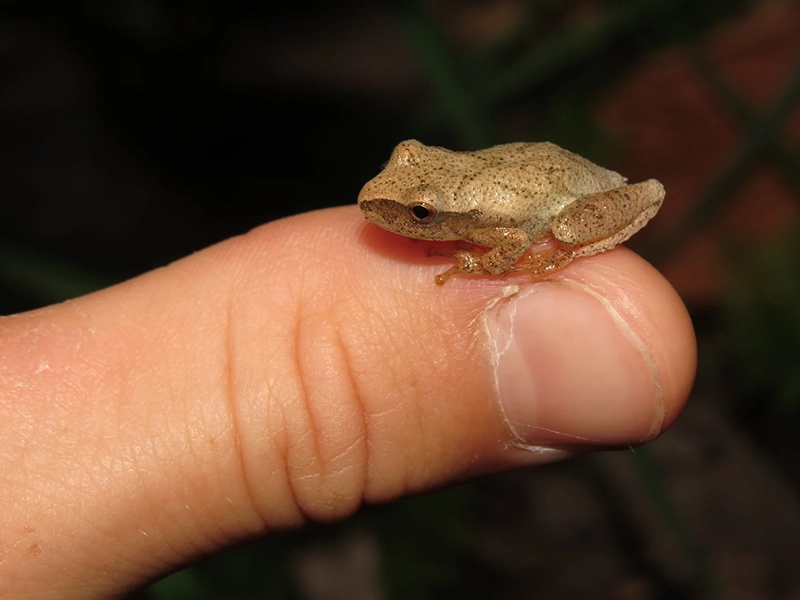
FynKynd2014/flickr/ CC BY 2.0 |
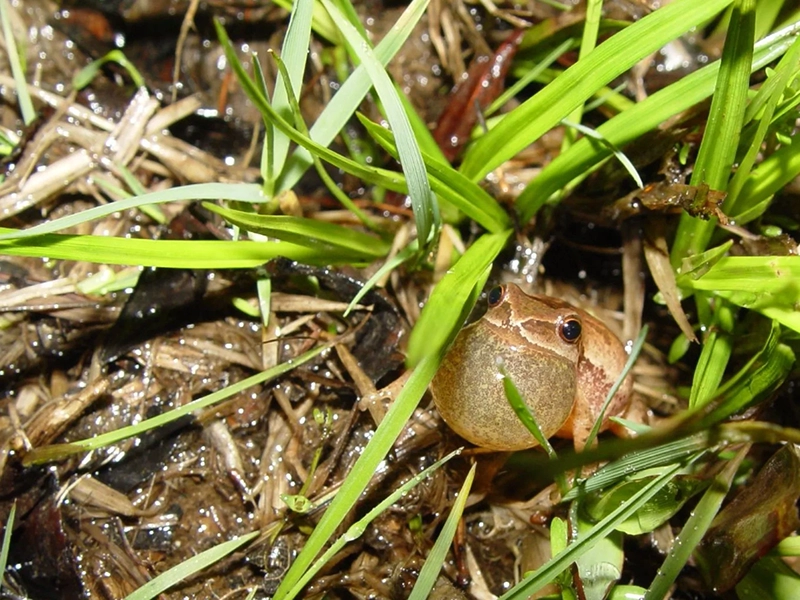
Batwrangler/flickr/ CC BY-NC-ND 2.0 |
That famous "peep, peep, peep" call is actually a mating call made by males trying to attract females. And they are not exactly subtle about it. These tiny frogs can call so loudly that entire wetlands seem to buzz with sound. On the right night, their chorus can be heard from quite a distance (almost 2 miles!), which is impressive for something you could easily lose in your pocket. In fact, these little frogs can actually chirp to a volume of about 90 decibels, which is equivalent to that of a lawn mower or hair dryer!
If you are near a pond, wetland, or vernal pool, you might be hearing dozens or even hundreds of peepers calling all at once. The louder and faster a male calls, the better his chances of finding a mate. So yes, it is basically a very enthusiastic frog talent show, and volume matters.
Spring peepers do not waste time once spring arrives. After mating, females lay hundreds of eggs in shallow water, often in vernal pools. These temporary springtime ponds dry up later in the year, which actually works out well for young frogs since there are no fish around to eat them.
Within a few weeks, those eggs hatch into tadpoles, and in as little as six to twelve weeks, they transform into tiny frogs ready to hop onto land and start the cycle all over again. It is a quick turnaround, especially for something that just spent the winter frozen solid.
For such a small creature, spring peepers are surprisingly tough. During the winter, they survive freezing temperatures by producing natural compounds that act as cryoprotectants, helping prevent damage as parts of their bodies freeze. They can then thaw back to life in the spring, which sounds like something out of science fiction but is very real. They also play an important role in the ecosystem. As adults, they help control insect populations by feeding on small bugs like ants, beetles, and spiders. At the same time, they serve as food for birds, snakes, and other wildlife. So while they may sound like they are taking over the neighborhood, they are actually doing a lot of good behind the scenes.
Around Lake Hopatcong and throughout New Jersey, spring peepers are one of the earliest and most recognizable signs that spring has arrived. Whether you are a seasoned naturalist or just someone enjoying a quiet evening outdoors, their chorus is a reminder that the natural world is waking up all around us.
So next time you hear that unmistakable peeping sound, take a moment to pause and listen. You are experiencing one of nature’s most iconic seasonal soundtracks, performed by a group of frogs that are somehow both tiny and extremely loud.
I hope you have enjoyed learning about these small but mighty amphibians. Perhaps this article has inspired you to explore the wonders of nature further, whether by reading a book, visiting a website, or simply stepping outside! If you have any wildlife photos from Lake Hopatcong, or if there’s a critter you’d like to see featured in an upcoming Creature Feature, please send your submissions to info@lakehopatcongfoundation.org. See you next time!

February 25, 2026
Environment

May 01, 2025
Education, Environment

April 01, 2025
Education, Environment